GEOPOLITICAL RISK ASSESSMENT: DUBAI MARKET 2026
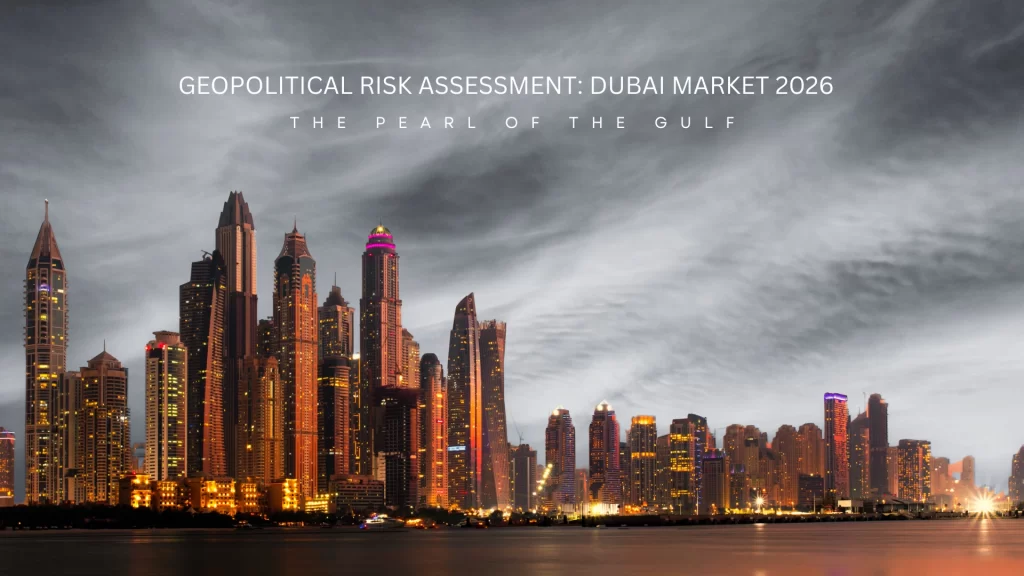
Reporting Period: March 2026
The market is currently absorbing the shock of direct military confrontations involving the U.S., Israel, and Iran, including recent retaliatory strikes that have briefly impacted UAE airspace and infrastructure. While the UAE’s sovereign credit rating remains stable at ‘AA’ (S&P Global, March 6), the operational and sentiment-driven risks have spiked.
- Real Estate & Construction Risk (High)
Supply Chain & Material Costs: The blockade of the Strait of Hormuz has forced logistics to reroute via the Cape of Good Hope, adding roughly 15 days to transit times. This is expected to drive up the cost of imported construction materials (steel, glass, finishing goods) by 10–15% in Q2 2026.
The “Double Supply” Trap: Dubai is slated to deliver 120,000 units in 2026—nearly double the historical average. If the conflict persists, the “wait-and-watch” approach by Indian and Chinese investors could lead to an inventory overhang, potentially triggering a 5–7% price correction in secondary markets.
Off-Plan Vulnerability: Since off-plan sales accounted for 65% of 2025 transactions, a sustained drop in foreign “fresh cheques” poses a liquidity risk for mid-sized developers.
- Aviation & Tourism Risk (Extreme)
Hub Disruption: Over 23,000 regional flights were cancelled in late February/early March. Emirates and Etihad have faced periodic grounding, leading to estimated losses in the billions.
Tourism Revenue: Forecasts for 2026 tourist arrivals have been slashed from a 13% growth projection to a potential 11–27% decline. This directly impacts the short-term rental market (Airbnbs/Holiday Homes), where yields are expected to soften by 5–8%.
- Macroeconomic & Fiscal Risk (Medium)
Energy & Inflation: Brent crude has surged to $80–$82 per barrel due to the Hormuz crisis. While this strengthens the UAE’s fiscal buffers, it accelerates local inflation, increasing the cost of living for the 90% expat population.
Capital Outflow: While UAE banks maintain strong net asset positions, there is a risk of “precautionary capital flight” as HNIs move liquid assets to neutral jurisdictions like Singapore or back to the Indian equity markets.
- Risk Mitigation Matrix
| Risk | Type | Likelihood Impact | Mitigation Strategy |
| Project Delays | High | Medium | Developers should prioritize “Ready-to-Move” inventory. |
| Pricing Volatility | Medium | High | Focus on assets with long-term institutional leases. |
| Insurance Hikes | High | Low | Anticipate a rise in property and maritime insurance premiums. |
| Investor Hesitation | Extreme | High | Pivot marketing toward GIFT City or domestic Indian luxury. |
- Conclusion for Stakeholders
Dubai is currently in a “forced cooling” phase. The primary risk is not a structural collapse (as seen in 2008) but a liquidity crunch caused by prolonged regional instability.
Recommendation for Buffet Invest: Given the 5 Lakh ticket size, your platform acts as a “de-risking” tool. Investors who are scared of committing 5 Crores to a single Dubai villa may find your fractional model an attractive way to maintain a “foot in the door” without over-leveraging during a war.
Join our Whats app Channel Whats App Channel : https://whatsapp.com/channel/0029Va4QnQXKQuJDKzWgtp1F
Like our Facebook page https://www.facebook.com/propheadlines/
For Latest Real Estate Investment News Log on to https://propheadlines.com/
Our Project Posting page https://propheadlines.net/