The Great Indian Housing Standoff: Why 2025 is the Year of the Negotiator
The Indian residential real estate market has entered a peculiar phase in 2025, characterized by what experts are calling a “Great Standoff” between optimistic developers and cautious buyers. While headline prices continue to show resilience, the underlying mechanics of the market reveal a significant shift in leverage toward the consumer.

A Market of Contradictions: Prices Up, Sales Down
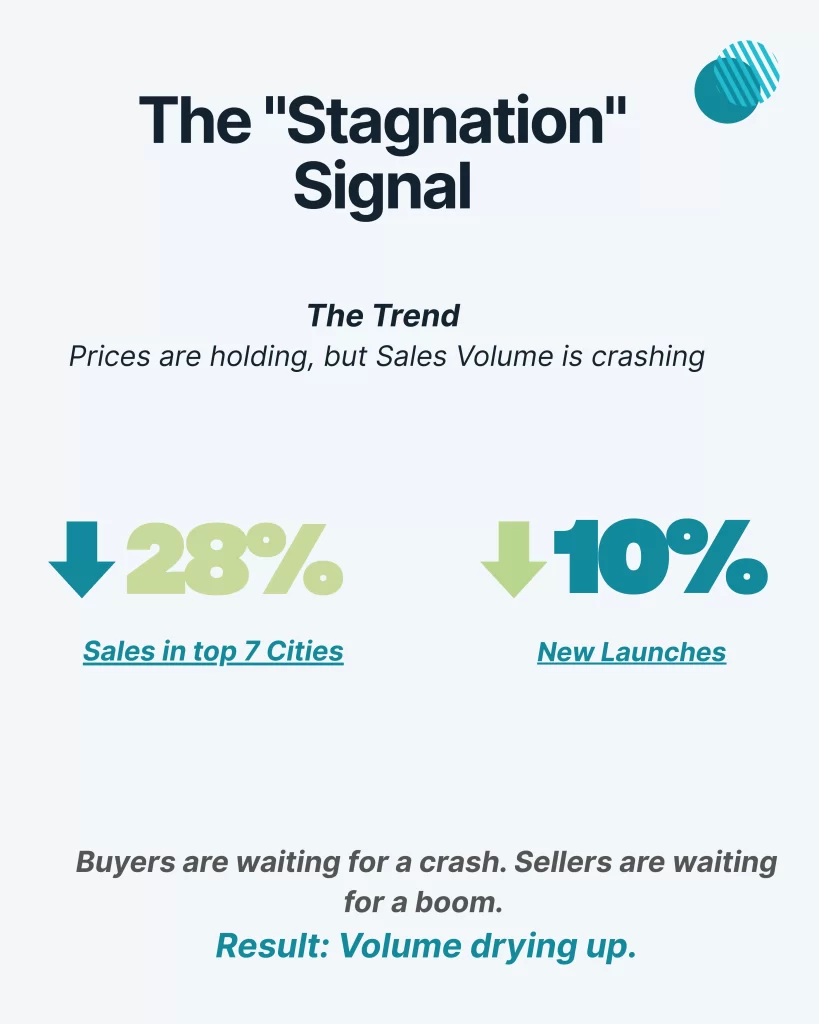
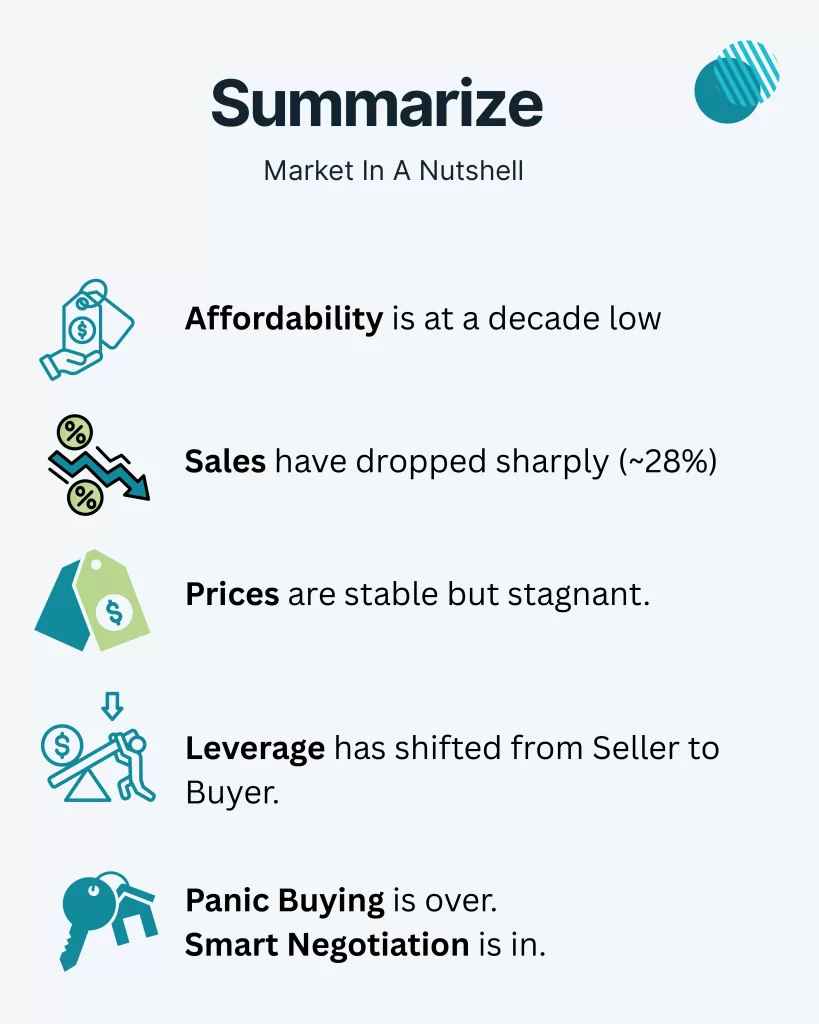
At first glance, the data presents a paradox. Property prices in key metros have climbed by approximately 10% Year-on-Year (YoY). However, this price appreciation has come at the cost of transaction volume. Sales in top Indian cities have seen a sharp contraction, dropping between 11% and 28%.
This “stagnation signal” indicates that while sellers are holding onto their asking prices, buyers are increasingly unwilling—or unable—to meet them.
The Affordability Gap and the “Luxury Trap”
The primary driver of this slowdown is a widening affordability crisis. Since 2020, housing prices have outpaced income growth twofold; while property values rose roughly 10% per annum, average salaries only grew by 5%. In Mumbai, the situation is particularly acute, where an average resident now requires over 14 years of gross income to afford a home.
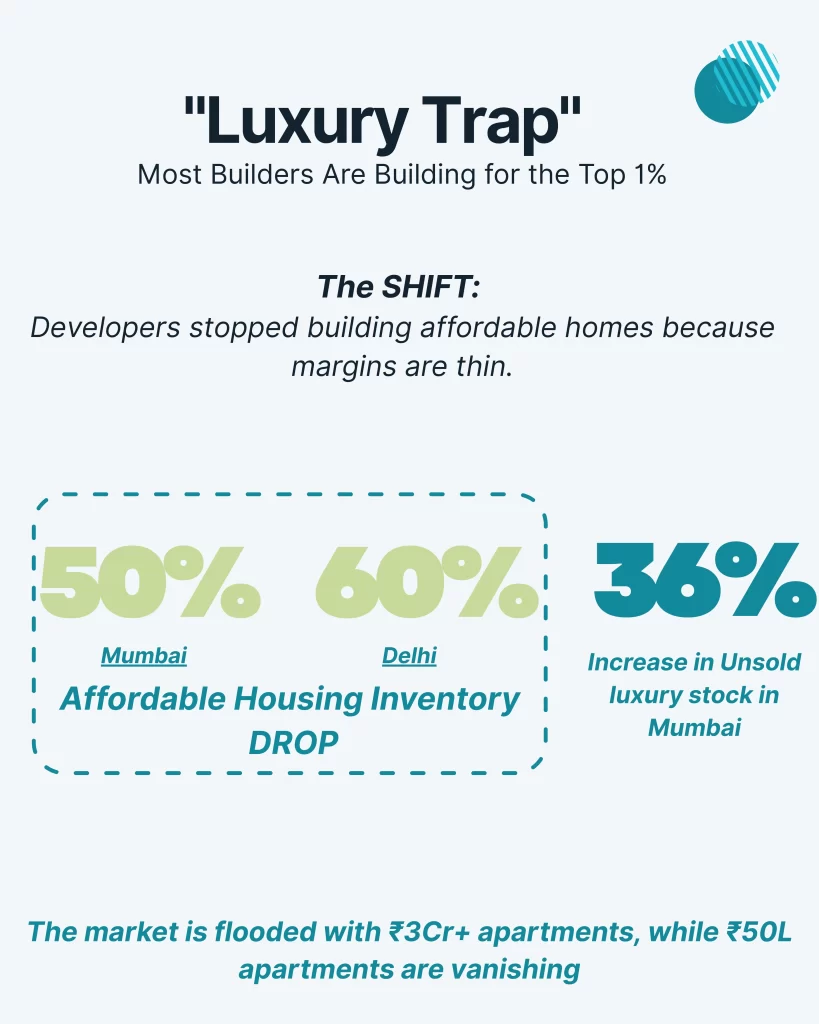
Furthermore, developers have largely abandoned the affordable segment to chase the higher margins of the “top 1%”. This has led to a “Luxury Trap”:
Vanishing Inventory: ₹50L apartments are disappearing from Tier-1 city centers.
Oversupply at the Top: The market is flooded with apartments priced at ₹3Cr+, leading to a 36% increase in unsold luxury stock in Mumbai alone.
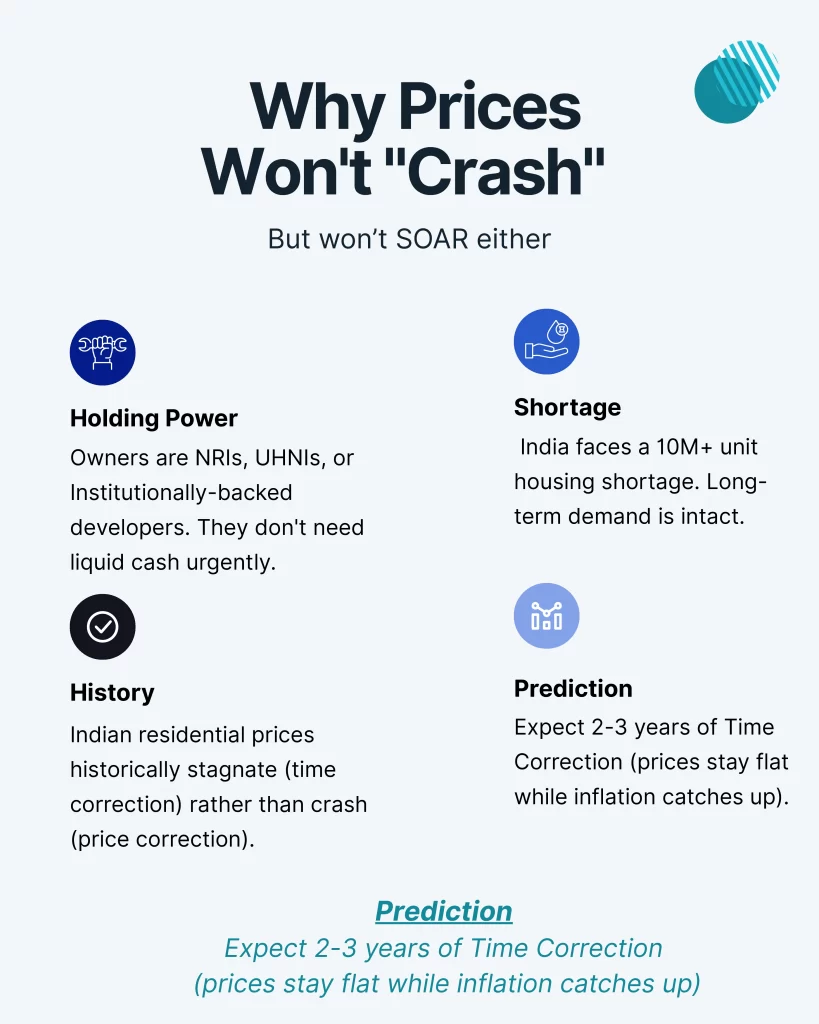
Why Prices Aren’t Crashing (Yet)
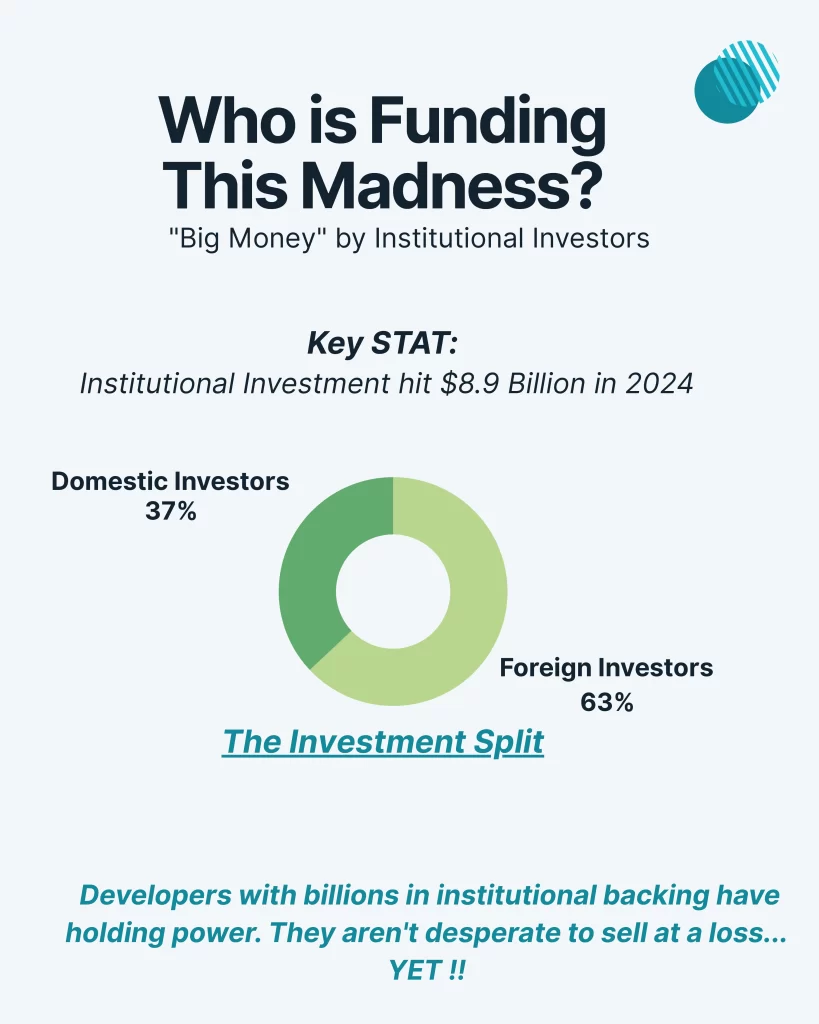
Despite the sales slump, a total market crash remains unlikely due to the “holding power” of current owners. Much of the current inventory is held by NRIs, Ultra-High-Net-Worth Individuals (UHNIs), or institutionally-backed developers who do not face urgent liquidity needs.
Institutional investment in Indian real estate hit $8.9 billion in 2024, with foreign investors accounting for 63% of that capital. These deep-pocketed backers allow developers to wait for a “boom” rather than selling at a loss.
The 2026 Buyer’s Playbook
Instead of a price crash, experts predict a “Time Correction” over the next 2-3 years, where prices remain flat while inflation and income slowly catch up. For savvy buyers, this creates a unique window of opportunity:
Negotiate Hard: With developers missing sales targets, buyers currently have the upper hand for the first time in three years.
Target Ready-to-Move: Focus on completed projects to save on GST and avoid execution risks.
End-Users vs. Investors: The market remains attractive for those planning to stay for 10+ years, but “quick flip” investors should remain cautious.
In essence, the “panic buying” of the post-pandemic era has ended. The current market rewards patient, strategic negotiation over impulsive investment.
Author : Tarun Kumar serves as the Executive Director – Office Services at Colliers India. His expertise lies in commercial real estate transactions and advisory, though he provides extensive analysis across the broader Indian residential and commercial landscapes and can be Reached at Tarun.Kumar@colliers.com
Gallery






Download the PDF here
Join our Whats app Channel Whats App Channel : https://whatsapp.com/channel/0029Va4QnQXKQuJDKzWgtp1F
Like our Facebook page https://www.facebook.com/propheadlines/
For Latest Real Estate Investment News Log on to https://propheadlines.com/
Our Project Posting page https://propheadlines.net/